昨天晚上在图书馆随便翻到一本书,上面有茨维塔耶娃的一些信,包括她自杀那天写给不同人的信,还有一个在她最后的日子里和她结识的人写的回忆文章,布罗茨基关于她的评论。看了这些东西感觉心灵受了震撼,有一种久违的感动,毕竟自己已经在向着干枯和琐碎方向下滑得太久了。
没有读过茨维塔耶娃的作品,只是对她有所耳闻。我在想是什么感动了我,这里面当然有信里表现出的俄罗斯人特有的那种真诚,那个时代对诗歌对文学的真挚的爱,但是最感动我的,也许就是两个字:“绝望“。在这一系列信里,你可以如此真切地读出她是怎样一步步被逼到绝望。这是一种最具体而又最抽象的绝望:找不到房子住,连当一个洗碗工的申请也被拒绝的绝望;德国入侵带来的对整个俄罗斯,对所有的人的绝望“你不觉得一切都完了吗?所有的人,整个俄罗斯。“
“绝望“对我有一种特殊的吸引力,特别想看到绝望的人的表现以及他们所写所想。比如喜欢看黑镜头上即将被枪决的人的表情,小学时参加的宣判大会上死刑犯们的表情,死刑犯最后的话,自杀者最后的遗书,伊拉克恐怖分子杀害人质的“砍头录像“…… 什么能让人结束自己的生命?是绝望,那么从反面来想,让人维持自己生命不至于自杀的就是希望了。看了那些文字,我开始想我的希望是什么。

星期日, 九月 17, 2006
星期六, 九月 09, 2006
无证上网in nanjing
七日到南京,一直到现在才有机会上网,而且是在网吧老板给了很大面子的情况下,因为这里上网登记管的很严,不但要登记身份证号,还要当面出示身份证,而我的身份证早掉了几个月了。不知道外国上网吧上网有没有管得这么严,不知道我国对网吧这么严厉的管制,是为了保护祖国的花朵还是为了防止人民接触“不良信息”呢?最近在大搞“大兴网络文明之风”建设,只是不知道怎么才算“文明”,上色情网站当然不算文明,可是我想我党更关心的是其他的“文明”吧——想起一个挺牛的bbs签名:“公民,你今天文明上网了吗?”
时间仓促,大致汇报一下:南京路边的法国梧桐很多,很高大,没有特别宽特别开阔的路,玄武湖风景非常好,尤其是里面那几个湖中小州,夫子庙那儿一定要晚上去,不过所谓的浆声灯影里的秦淮河肯定是找不到了,到了中山陵门口却没舍得买票进去,门票80太贵,NJU很小,里面那片面积不大的金陵大学建筑群还不错,中国古典建筑风格的……
一大堆手续要办,我这人最怕麻烦。
下回再说。
时间仓促,大致汇报一下:南京路边的法国梧桐很多,很高大,没有特别宽特别开阔的路,玄武湖风景非常好,尤其是里面那几个湖中小州,夫子庙那儿一定要晚上去,不过所谓的浆声灯影里的秦淮河肯定是找不到了,到了中山陵门口却没舍得买票进去,门票80太贵,NJU很小,里面那片面积不大的金陵大学建筑群还不错,中国古典建筑风格的……
一大堆手续要办,我这人最怕麻烦。
下回再说。
星期二, 九月 05, 2006
不丹——最后的香格里拉
昨天晚上在messenger上遇到了高三时网上认识的一个笔友,五年多没有联系了,有些激动。她家在不丹的首都廷布,算是一个被世界遗忘的角落吧。据说不丹特别重视环境保护,尽管森林覆盖率特别高,可还是严格控制木材的砍伐,而且从某报上看过一篇报道,说不丹政府不以经济发达为追求目标,而是致力于提高人民的“幸福指数”,也就是说,人家并不认为物质决定意识,经济基础决定上层建筑,整天把GDP挂在嘴边。希望以后能有机会能去不丹玩,顺便爬爬附近的珠穆朗玛峰。
和她认识时刚接触网络不久,那时候觉得能在网上和那么遥远的地方的人聊天,真的是一件奇妙的事情。后来出乎意料的收到了她从不丹寄来的信(不是email),记得当同学告诉我有一封我的来自国外的信时,我是那么的惊讶和高兴。不丹的信封和邮票都做得很有特色,非常漂亮,至今我还保留着那些信。由于是用英文交流,信的内容都停留在很浅的层面,类似英语作文——其实和她就是在一个英语学习网站上认识的。相互写了来两三封信之后,再没有联系。
她现在在美国上本科最后一年,学的是graphic design.而我告诉她我学的是chinese ancient literature——a weird major.
不丹国旗(怎么像咱大清国旗):



"The Land of The (Peaceful) Thunder Dragon"
"Peaceful was added later, but we like it anyway."


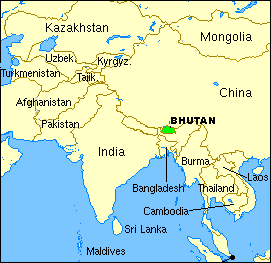
Our Land locked Mountain Kingdom is bordered by Tibet, China, India, near Nepal and Bangladesh. Never Heard of Bhutan? The spelling has changed a few times. The original spelling from Marco Polo times was "Bootan" in the Roman Alphabet, but we call our country "Druk Yul." Most Asians haven't even heard about Bhutan - we've been pretty quiet up here in the Himalayas. We were not involved with the Industrial Age, the World Wars, nor the Arms Race, and until recently not even cyberspace. In fact many of us didn't know you existed until we got your e-mail. We live on our own "Roof of the World" and have kept to our selves for hundreds of years.
Now it is permissible to visit Bhutan. Find out about Bhutan and visit soon.
 Geography:
Bhutan is a landlocked country. It is about 47,000 kilometres - roughly the size of Switzerland. It is located between Tibet in the north, Indian states of West Bengal and Assam in the south, and Arunachal Pradesh in the east.
Bhutan is a land of soaring snowcapped peaks, alpine meadows and densely forested hills and ravines abounding in exotic flora and fauna. From May to August, hills are covered with an awesome variety of flowers decorated with waterfalls and streams gushing in wild abandon.
 History:
Bhutan's early history is steeped in Buddhist tradition and mythology. Bhutan's medieval and modern history was a time of warlords, feuds, giant fortresses and castles. The visit of Padama Sambhava in 747 AD is the important landmark in the history of the country. The kingdom's recent history begins with a hereditary monarchy that was founded in the 20th century and continued the country's policy of isolationism. It was under the leadership of the third king that Bhutan emerged from its medieval past of serfdom and reclusion.
 Despite the speed of modernization, Bhutan has maintained a policy of careful, controlled policy of development in order to preserve its national identity.
Though known as Bhutan to the outside world, to the Bhutanese, the country is known as Druk Yul, 'land of the thunder dragon'. The people are known as the Drukpas.
 Religion/Culture:
The State religion is Drukpa Kagyupa a branch of Mahayana Buddhism. It has been institutionalised in the Dratshang (Central Monk body), headed by the Je Khenpo (Chief Abbot) who is chosen from among the most learned lamas and enjoys an equal rank with the King. Bhutan is the only country in the world to have adopted Mahayana Buddhism in its Tantric form as its official religion.
The Buddhist faith has played and continues to play a fundamental role in the cultural, ethical and sociological development of Bhutan and its people. It permeates all strands of secular life.
People:
Bhutanese are a mongolid race of people who originally migrated into and settled the country in the 7th Century AD. A nomadic and pastoral society at first, they gradually turned to agriculture in the fertile valleys.
There are three main ethnic groups - the Ngalongs in the western and central regions are the descendants of Tibetan immigrants who arrived in Bhutan from the 9th century. The Sharchops who live in the east of the country, are recognized as the original inhabitants of Bhutan. The third group is known as Lhotshampas. They represent the Nepali speaking ethnic group. The total population of Bhutan is about 600,000.
Sakten Valley, world of the Brokpas
Festivals:
There are many religious festivals. The best known festivals are the Tsechus which are held at different times of the year in different locations. Tsechus are celebrated for three to five days with both monks and laymen taking part in the ritual mask dances.
Tsechu Schedules
Dzongs:
These massive fortress-monasteries decorate most hill-tops and valleys. They serve as the administrative headquarters and are the focus of secular and religious authority in each districts.
Architecture of Bhutan
The Rural Bhutan:
The first thing that a visitor to Bhutan will notice is the great expanse of green, forested hillsides. A drive or trek through the country-side of Bhutan will take you from the subtropical forests over high alpine passes and down to broad valleys with colorfully painted houses scattered across the landscape.
Trekking:
For the trekking enthusiasts, there are numerous routes ranging from low ( 9840 ft) to medium (10,000 ft) to very high altitude (14,400 ft) treks. Rainbow Tours and Treks and Sakten Tours and Treks can organize dozens of different programs including Eco-Trekking, an Orchid Trek, Medicinal Plant Treks, Bird-Watching Treks and a Yeti trek. Trek and Tour Itineraries
Flora and Fauna:
Bhutan is a botanical paradise. One of the ancient names given to Bhutan was 'Southern Valleys of Medicinal Herbs'. To name a few floras in Bhutan- rhododendrons, junipers and magnolias several meters high, carnivorous plants, rare orchids, blue poppy (national flower), edelweiss, gentian, medicinal plants, daphne, giant rhubarb, high-altitude plants, tropical tress, pine and oak etc.
Among the rare and exotic faunas found in Bhutan are - Golden Langur, Red Pandas, Black-necked Crane, Snow Leopard, Takin, Musk Deer, Himalayan Brown Bear, Himalayan Marten, Tiger, hornbills, pheasants, mountain goats and timid blue sheep.
Flowers of Bhutan
Bird Watching in Bhutan
The Thrung Thrung Karm
订阅:
博文 (Atom)


 博文
博文


